
|
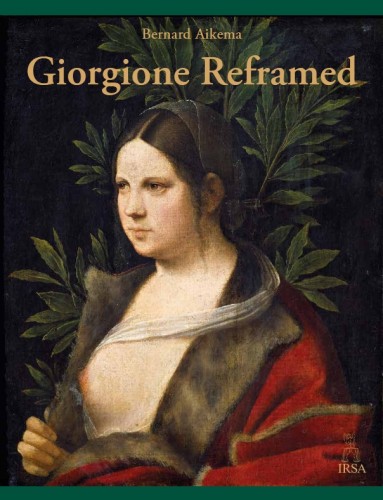
Giorgione Reframed Bernard Aikema Cracow 2026 285 x 220 mm, 288 pages 129 illustrations, laminated hardback ISBN 978‑83‑89831‑49‑1 Translated from the Italian by Emma Mandley Price : 50.00 EUR Add to cart |
Giorgione is among the most intriguing yet enigmatic figures of the Italian Renaissance. His biography and oeuvre remained elusive. Even his contemporaries found him hard to pin down and current scholarship still contends with much of his life and work, where attribution and interpretation dominate the discussion. Commonly hailed as a unique, almost solitary genius and acknowledged as a forerunner to Titian’s triumphs, Giorgione is acclaimed for his poetic atmosphere, colouristic approach and his ability to convey mood and sensation – attributes that changed the course of Venetian painting. This laudatory reading originates largely with Vasari and has continued to be reinforced ever since.
Combing through the sources with meticulous acumen, Bernard Aikema argues that the painter’s increasingly legendary persona was forged in the seventeenth century, emerging not from verifiable historical evidence or facts, but from the art theory and cultural narratives of later Venetian commentators and critics, with Carlo Ridolfi leading the way. By projecting their own aesthetic and marketing priorities onto the artist, these writers effectively fabricated the Giorgione brand. Simultaneously, painters like Pietro della Vecchia with his ‘pseudo-Giorgionesque’ inventions, gave the cause a crucial boost. This staged posthumous reception, partly prompted by a desire to counter Vasari’s Tuscan bias, turned the Castelfranco painter into a pivotal figure of the Venetian Renaissance, a recasting made possible precisely by his mysterious aura: Giorgione suitably fit the brief.
In this provocative revisiting of Giorgione’s short life, oeuvre and myth, Aikema, after questioning the historical basis for this celebrated genius, shifts his focus in the second part of the book toward delineating a cluster of visually coherent paintings produced in Venice and the Veneto region in the early sixteenth century, which he terms ‘the Giorgione Group’. The idea is underpinned by placing these works within a specific artistic culture and social milieu, where the artwork, the viewer and, by extension, the art market engaged in a dynamic give-and-take to negotiate meaning and significance: a constructive discours as a civil pastime pursued for learning, intellectual stimulation and social engagement. And, of course, also for enjoyment! Multiplicity of interpretations was fundamental, but the process of meaning-making mattered more than the meaning itself. Accordingly, the stylistic and interpretative ambiguities which are characteristic features of these works arise from a shared mode of artistic production and reception rather than from the mind of a single individual. With so few works that can be reliably attributed to him, the why and how of Giorgione’s fame have come to matter historically: his legacy and artistic footprint thus require reframing.
In tracing source material and historiographical assumptions back to their origins, dispelling the myth of Giorgione through a discursive sequence, the author fuses scholarly rigor with an engaging narrative voice, evocative of Castiglione’s ‘sprezzatura’, in a way uncommon in academic art history writing. Like a tenacious police investigator who clings to the thread of his evidence, Aikema guides the reader through sources and arguments as clues unfold, as if he were finally cracking a ‘cold case’ once and for all.
Bernard Aikema, born in Amsterdam in 1949, is an art historian specializing in Italian Renaissance and early Baroque painting, with a particular emphasis on the Venetian tradition, who has taught at various European and American universities. His scholarship has centred on artists such as Lotto, Titian, and the Bassano family, and on broader questions of artistic identity, workshop practice and patronage. Aikema subsequently broadened his scope to the wider European context with a special focus on the Northern Renaissance. He contributed significantly to issues of attribution, has a broad interest in seventeenth- and eighteenth-century painting, and a penchant for the role of draughtsmanship in artistic training and production. Through his teaching, international curatorial projects, and widely translated publications, he is recognized as one of the leading scholars of early modern European art.
Contents
Acknowledgements
Preface
I. Giorgione, between Poetry and Truth
1. Poet of the Paintbrush
2. Half-figures, Portraits and the Shadow of Leonardo
3. Ridolfi’s Construct
4. A Seventeenth-century Conspiracy
5. But What About Giorgione…?
6. Major Rejections and Problematic Cases
II. Micro-histories
1. The Tempest
2. La Vecchia
3. Two Small Panels by Lorenzo Lotto
4. The Three Philosophers
5. Boy with an Arrow, Laura and Other (Pseudo)portraits
6. Judith
7. The Allendale Adoration of the Shepherds
8. The Three Ages of Man
9. Phaeton Asks to Drive Apollo’s Chariot
10. Other Cases
11. At last, Giorgione
12. In Conclusion
Index
Bibliography